
TL;DR
Pages published or updated in the past 12 months had 88% higher odds of being cited across 193,507 AI answers, but pages under 30 days old were cited least of any age group in AirOps' ChatGPT data.
Of the cited pages Seer Interactive could date both ways, 72% were updated in the last year and only 42% were published in the last year, so the engines reward maintained pages, not new ones.
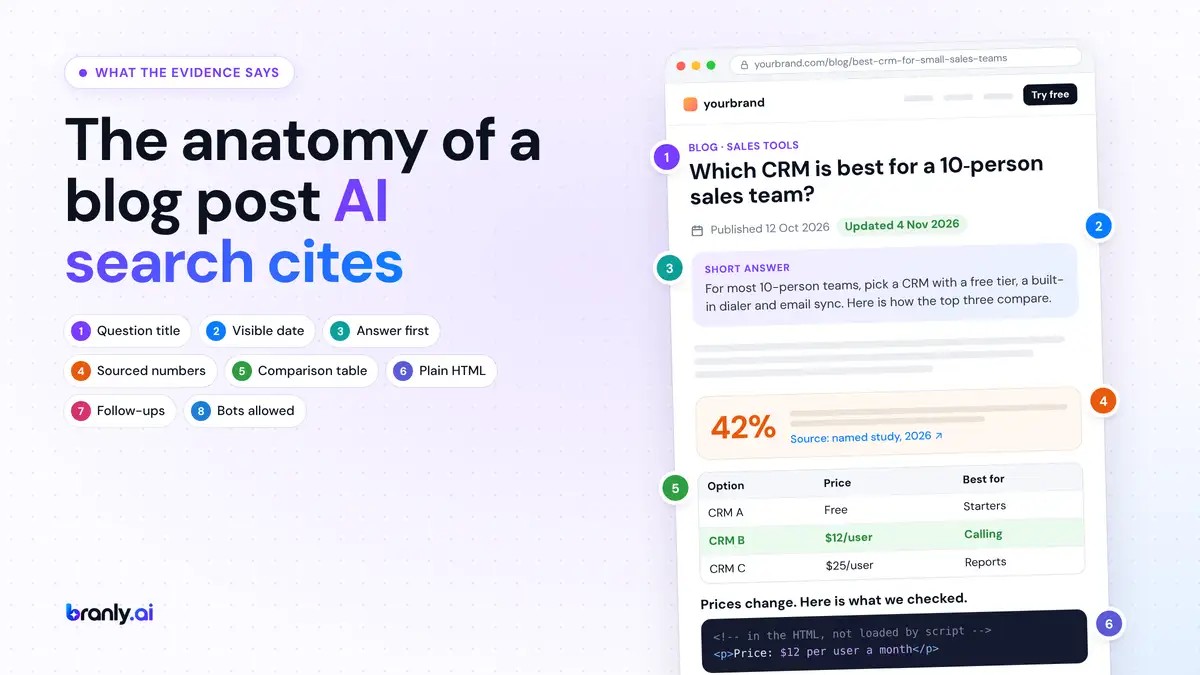
Changing the date or adding the year to a title without changing the page showed no effect beyond normal noise in OtterlyAI's test, and Google's John Mueller calls fake dates a lazy setup.
Fresh pages get cited more. The newest pages get cited least.
"Fresher content wins" is the line going around this week. Post more, update your dates, put 2026 in the title, and ChatGPT will pick you. A vendor post claims a 3x lift for pages touched in the last 30 days.
The studies mostly agree that fresh pages win. They also show something the line leaves out. The pages AI cites are old pages kept current. Brand new pages do worse than pages a few months old. And no test shows that a changed date helps on its own.
Four studies, one direction
The newest study is from TJ Robertson, who runs an SEO agency in Nevada. He pulled 193,507 answers from ChatGPT, Google AI Mode and AI Overviews for 78 businesses between 27 August and 21 October 2026. He then compared 21,874 pages the engines cited with 4,507 pages that sat in Google's top ten for the same question and never got cited.
Pages published or updated in the past 12 months had 88% higher odds of being cited. A year in the title did even more: those pages had more than twice the odds. He calls these associations, not causes.
Seer Interactive, an agency, dated 7,683 pages carrying 47,097 citations from ChatGPT, Gemini and Perplexity across four client brands, March to June 2026. 75% of the cited pages were updated in the last year. Gemini leaned on fresh pages most (78%), Perplexity least (65%).
Ahrefs, which sells SEO tools, looked at 17 million cited URLs in a study published in July 2025. On average, AI assistants cite pages 25.7% fresher than Google's organic results. ChatGPT citations were 458 days newer than Google's organic results.
So far the belief holds. Now the parts it misses.
Brand new pages do worst
AirOps, which sells AI content software, ran 16,851 queries through ChatGPT three times each for a report published in April 2026, and scraped 353,799 pages. It sorted them by age and counted how often each age group got cited.
Pages under 30 days old were cited 25.3% of the time. Pages 30 to 89 days old were cited 32.8% of the time, the best of any group. Pages over five years old came in at 27.6%, better than the newest pages.
AirOps' guess is that brand new pages have not been fully indexed or picked up retrieval signals yet. Whatever the reason, the page you published last week is the one least likely to show up. Freshness is a window, not a race to be newest.
The window also moves by category. In finance, pages 30 to 89 days old were cited 50.2% of the time, against 35.1% for pages over five years old. In e-commerce, age barely mattered: 35.9% for the fresh group, 36.7% for the five-year-old group. In health, pages one to two years old did slightly better than fresh ones.
Updated beats new
Seer's second finding is the one to act on. Of the 4,124 pages where both dates could be read, 72% looked fresh by last update. By publish date, only 42% did. More than a quarter of the "fresh" pages were first published over two years ago.
Ahrefs saw the same shape from the other end. The pages AI assistants cite still average 2.9 years since publication. Google's AI Overviews, the exception in that study, cite pages 16 days older than organic results. In the authors' words, AI assistants still prefer citing long-lived content.
Put the two together. The engines are not rewarding new pages. They are rewarding old pages with recent updates. Seer's own summary: publish and forget loses.
Changing only the date is unproven
The date is where the belief turns into a trick, and no test shows the trick works on its own.
Google's John Mueller, asked on Reddit about sites that set every sitemap date to today, called it a sign of a broken setup with no positive effect, one that makes it harder for search engines to spot truly updated pages. Ahrefs repeats the warning in its study.
OtterlyAI, which sells AI visibility tracking, tested the year trick in July 2026. It added "2026" to the title and H1 of 11 of its own blog pages and changed nothing else. Citations to the edited pages rose 56% and 61% in the two groups. An untouched page rose 63% over the same window of about two weeks. One page produced 93% of the gain in one group; three of the 11 pages fell. The company called the result inconclusive and smaller than normal week-to-week noise. Robertson's link between a year in the title and citations is a pattern across many pages, not a test of the change itself.
That noise is the last thing to know. In Robertson's data, a page cited this week had a 24% to 28% chance of being cited by the same engine next week. After seven weeks, 11% to 16%. A fresh page can spike and vanish. Seer saw the same: pages cited in only one of its four months were the freshest group (86% updated within a year), while pages cited every month were older (68%).
What we see on calls
On a Branly call last week, a healthcare software company with six to seven years of blog posts raised a worry: every new article on a familiar topic competes with an old one. That is the right worry. Branly's "Improve your page" recommendation exists for it. It picks the existing article that is losing to a competitor page AI already cites, puts the two side by side, and lists what to add. The old URL keeps its history. The content gets current.
What this means for brands
-
Start with the pages AI already cites or that rank on Google for your buyer's questions. Make real changes: this year's prices, the current product list, a new section answering the follow-up question. Then update the date and the schema. Date first, content never, is the version Mueller is warning about.
-
Give a new page 30 to 90 days before you judge it. If a season or a launch matters, the page needs to be live a quarter ahead, not a week.
-
Set a refresh cadence by category, not by habit. Finance, travel and software pages aged within months in the AirOps data. E-commerce pages and evergreen product content did not. Put the effort where age costs citations.
Sources
- TJ Robertson, "AI citation study: 193,507 ChatGPT, AI Mode and AI Overview answers for 78 businesses"
- Seer Interactive, "Study: Content Recency's Impact on AI Visibility in 2026"
- Ahrefs, "New Study: AI Assistants Prefer to Cite 'Fresher' Content (17 Million Citations Analyzed)"
- AirOps, "The Fan-Out Effect: What Happens Between a Query and a Citation"
- OtterlyAI, "Year in Title: Does It Increase AI Citations?"
- Search Engine Journal, "Google's John Mueller: Updating XML Sitemap Dates Doesn't Help SEO"
- Serpent API, "Freshness Wins: Recent Content Earns 3× More ChatGPT Citations"
Date
November 5, 2026